

Built for scientists. Designed for impact.

Your expertise shouldsurvive PowerPoint.

Presentations that feel directed, not generated.

SlideCraft turns last year’s PowerPoint, a rough outline, or a fresh topic into a teach-ready medical lecture — with structure, citations, speaker notes, and cinematic clarity.

See it rebuilt — live → · Watch the engine think →

90-second previewPay only to exportPHI-aware warnings
Engine activity
flagOutdated citation detected — 2024 series supersedes
rebuiltHierarchy simplified — one teaching point per slide
projectionProjection density reduced — readable at 6 meters

Built from a real skull-base & neuro-oncology archive — HSJ Porto Alegre · 770+ slides rebuilt across 34 topics

Dr. Erion Jr. de Andrade, neurosurgeon

Built by the user it’s for

“I rebuild a lecture every week — grand rounds, tumor board, fellow teaching. Sunday is for family, not slide cleanup. That’s why SlideCraft exists.”
  • FellowshipThree international fellowships — Cleveland Clinic(skull base · neuro-oncology · radiosurgery, 2020–2023) and Emory University, Atlanta (skull base + open vascular, 2023–2024).
  • PracticeCo-director, Skull Base Surgery Unit · Residency preceptor · Hospital Santa Casa de Porto Alegre.
  • TrainingNeurosurgery residency — UNICAMP, Campinas (2016–2021).
  • CredentialsCRM/RS 41.263 · RQE 44481 · Member, Sociedade Brasileira de Neurocirurgia.

The actual pain

Your lecture is probably good. Your slides are probably fighting you.

Case study · one real lecture

How a 42-slide vestibular schwannoma deckbecame a teach-ready grand rounds lecture — in eighteen minutes.

Pulled from a Brazilian neurosurgery archive, last edited September 2021. Mixed fonts. Outdated references. No speaker notes. The kind of deck a fellow inherits and silently rebuilds at midnight.

Beforevestibular_schwannoma_2021.pptx · slide 04

Vestibular Schwannoma: Management

  • CPA tumors 6–8% of intracranial neoplasms; most are schwannomas.
  • Observation appropriate in selected elderly patients with small tumors.
  • Hearing preservation requires careful candidate selection and follow-up.
  • Microsurgery: retrosigmoid, translabyrinthine, middle fossa.
  • SRS offers tumor control but hearing outcomes vary by series.
  • Facial nerve outcomes, QoL, tumor growth rate — all unaddressed.

10 bullets · 2 outdated refs · 0 speaker notes · unreadable at 6 m
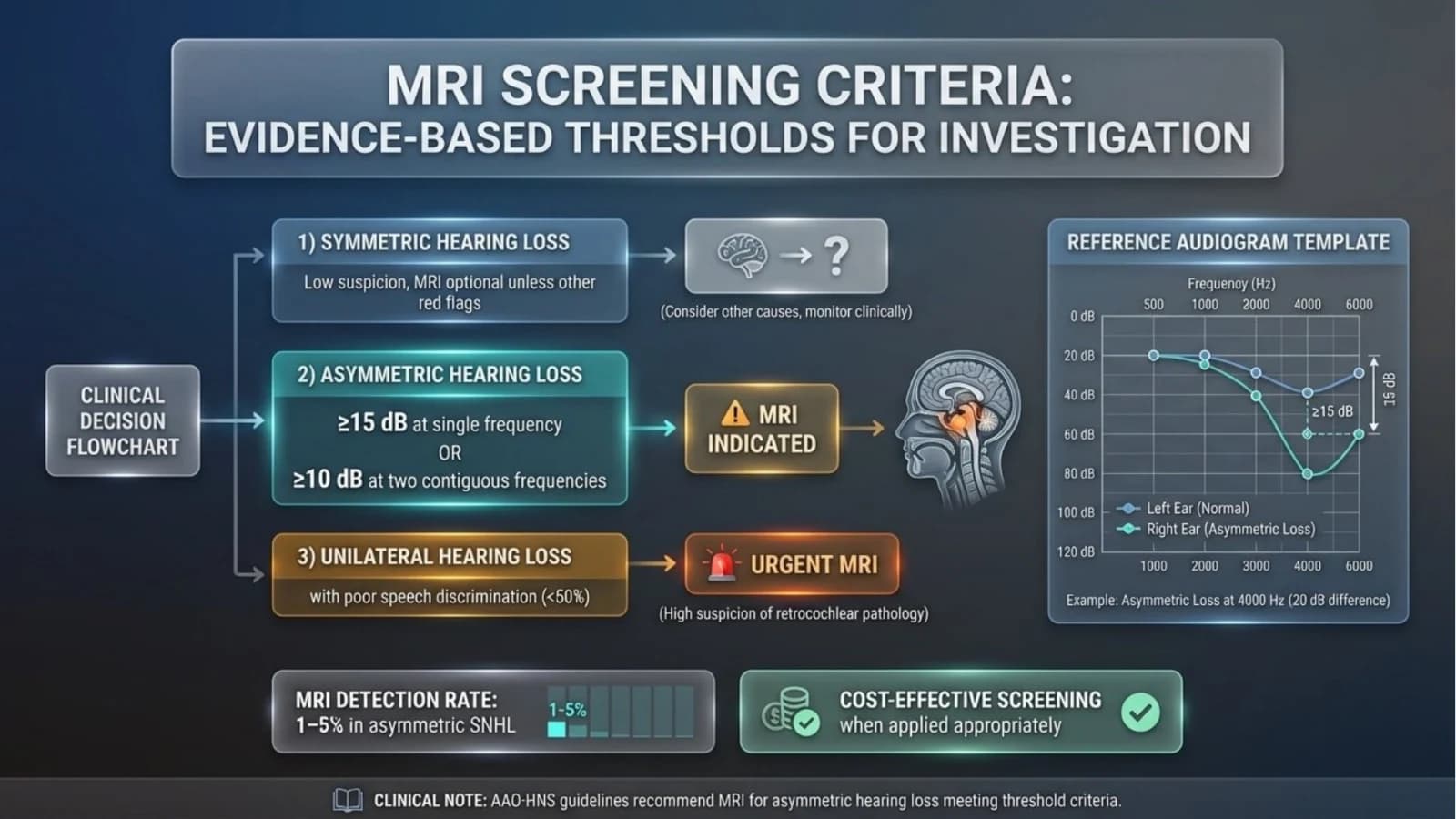
Aftergrand_rounds_VS_v2.pptx · slide 12
SlideCraft-rebuilt slide: MRI screening criteria for asymmetric hearing loss with audiogram template and clinical decision flowchart

1 teaching point · 3 citations · PGY-1 notes · 1 flag resolved

  1. 01

    The original slide.

    Ten dense bullets, no hierarchy. Two outdated references. Zero notes.

    vestibular_schwannoma_2021.pptx · slide 04 / 42

    Vestibular Schwannoma: Management

    • CPA tumors represent 6–8% of intracranial neoplasms; most are schwannomas.
    • Observation appropriate in selected elderly patients with small tumors.
    • Hearing preservation requires careful candidate selection and follow-up.
    • Microsurgery: retrosigmoid, translabyrinthine, middle fossa.
    • SRS offers tumor control but hearing outcomes vary by series.
    • Need to discuss facial nerve outcomes, QoL, tumor growth rate.
    • References outdated and inconsistent formatting.
    • Speaker notes missing for resident teaching points.
    • Slide has too much text for projection.
    • Visual does not match key anatomy.
  2. 02

    Teaching point extraction.

    SlideCraft reads the slide as content, not pixels. The single decision-making teaching point surfaces.

    10 facts competing for attention.

    Decision: who gets surgery, who gets SRS, who gets observed.

  3. 03

    Structure restored.

    One teaching point per slide. Hierarchy. Density tuned for a projector at 6 meters.

    • TitleSurgical management of small VS
    • Frame3 candidate axes — hearing, growth, anatomy
    • VisualAnatomical illustration anchor · left third
    • NotesPGY-1 calibrated speaker notes · 38 words
  4. 04

    Evidence attached.

    Slide-level citations surface from PubMed. Dense paragraphs become reviewable claims.

    • citedHearing preservation > 50% in selected patients undergoing retrosigmoid approachCarlson et al., 2018 · PMID 29852741
    • flagOutdated SRS hearing outcome — 2024 series shows different rateReview flag · suggested replacement: Niranjan 2023, PMID 37214502
    • needs sourceFacial nerve outcomes by approachSlideCraft proposes 2 candidate citations
  5. 05

    The rebuilt slide.

    Same teaching point, projector-ready. Speaker notes attached. Citations on slide + references slide.

    grand_rounds_VS_v2.pptx · slide 12 / 28MRI screening criteria for asymmetric hearing loss — SlideCraft-rebuilt slide with audiogram template and clinical decision flowchart

    Surgical management of small VS3 citations · speaker notes · 1 review flag resolved

  6. 06

    Editable export. Not flattened pixels.

    The bullets remain text in PowerPoint. Edit the citation, change the dose, swap the figure — without regenerating the deck.

    PowerPoint · Slide 12 · Outline view

    Surgical management of small VS

    • Hearing-preserving retrosigmoid — selected candidates only
    • SRS for tumors < 2.5 cm with serviceable hearing (Niranjan 2023)
    • Observation if growth < 2 mm/yr in patients > 70

    .pptx · text editable in PowerPoint, Keynote, Google Slides · not rasterized

Lecture intelligence engine

Not slide generation. Slide reasoning.

SlideCraft reads a deck the way a senior clinician reads a deck — claim by claim, slide by slide, audience in mind. Every rebuild is a chain of explicit detections and explicit transformations.

SlideCraft detects

What is wrong with this lecture.

  • 01Outdated guidelines and superseded referencesflag
  • 02Citation drift between claim and supporting paperflag
  • 03Projection density too high for an auditorium screenflag
  • 04Unreadable hierarchy — competing teaching points per slideflag
  • 05Unsupported claims that need a source attachedflag
  • 06Duplicated teaching points across slidesflag

SlideCraft rebuilds

What it actually reconstructs.

  • 01Lecture flow restructured around decision-makingrebuild
  • 02Narrative pacing tuned to audience and time slotrebuild
  • 03Audience calibration — PGY-1 versus attendingrebuild
  • 04Speaker cognition support via paced presenter notesrebuild
  • 05Evidence anchored at slide level — PubMed citations attachedrebuild
  • 06Editable layers preserved for last-minute clinical editsrebuild

Doctors don’t want AI-generated presentations. They want their expertise transformed into polished teaching material — without losing control.

SlideCraft · what we believe

From old deck to teach-ready deck

One flow. No blank-slide theater.

The conversion hook is a free before/after preview. Signup happens when the user asks SlideCraft to rebuild the full lecture.

01

Upload a .pptx or .pdf

SlideCraft extracts text, screenshots, slide order, and source metadata from the lecture you already have.

Intake
02

Preview the rebuilt version

See 3-5 before/after slides with cleaner hierarchy, stronger flow, and suggested transformations before signup.

Free preview
03

Review suggested improvements

Dense, needs citation, outdated stat, and low-confidence rebuild flags appear at slide level.

Trust
04

Open in the editor

Text, notes, citations, layout, and visuals stay separate so clinicians can edit the deck without regenerating it.

Control
05

Export to PowerPoint

The output is a teach-ready .pptx that remains editable when the final clinical nuance needs changing.

Ship

Honest scope

What SlideCraft does — and what it doesn’t (yet).

Doctors stake reputation on what’s on the slide. We label what v1 actually does, and what we’re not claiming until later releases earn it.

What we do

  • Slide-level citation support (you confirm the sources)
  • Review flags for outdated stats and dense slides
  • Speaker notes calibrated to your audience
  • Editable .pptx export — bullets stay as text, not pixels

What we don’t (yet)

  • Verify every claim across the medical literature
  • Auto-update slides against new guidelines
  • Decide your teaching position for you
  • Replace your judgment as the lecturer

Founder pricing — locked for early users

Free to preview. Paid to export.

Bring a deck or a topic. Build the lecture. Pay only when you take it out the door — on your terms, cancel anytime.

Free

Preview without commitment

$0forever

No card on file

  • 2 deck previews per month
  • Rebuild + outline editor
  • Speaker notes preview
  • No card · no export
Try a preview
Most chosen

Pro

For clinicians who teach weekly

$29/ month

Annual $290 — two months free

  • 10 lectures per month
  • Editable .pptx export
  • Critic Mode deck review
  • Speaker notes · slide-level citations
Start Pro

Expert

For evidence-heavy teaching

$59/ month

Annual $590 — two months free

  • 25 lectures per month
  • PubMed claim verification
  • Paper import · evidence inspector
  • Permanent storage · priority queue
Start Expert

All plans · 90-second free preview · PHI-aware uploads · cancel from billing portal · keep every export you paid for.

770slides rebuilt in real teaching workflows
34medical topics — from skull base to pediatric oncology
8specialties — tumor boards, grand rounds, journal club

What can you rebuild?

Real medical teaching formats, not generic pitch decks.

Grand roundsResident noon conferenceJournal clubTumor boardBoard reviewM&MPatient educationConference talkOld PDF handoutDraft lecture outline

The cinematic engine for expert communication. First wedge: medical lectures.

Start with your next lecture

Stop starting from a blank slide.

Bring the deck you already have, an outline, or just a topic. SlideCraft returns a teach-ready lecture with speaker notes, citations, and review flags — ready before the talk is.

Free preview. No card. Pay only to export.